
You're not following an instructor.
You're discovering yourself.
Awareness Through Movement® classes are a guided journey inward, where you learn to notice how you move and discover what becomes possible when you pay attention.
In a typical movement class, you watch the teacher and do what they do. You try to match their form. You follow the sequence.
Awareness Through Movement® is different.
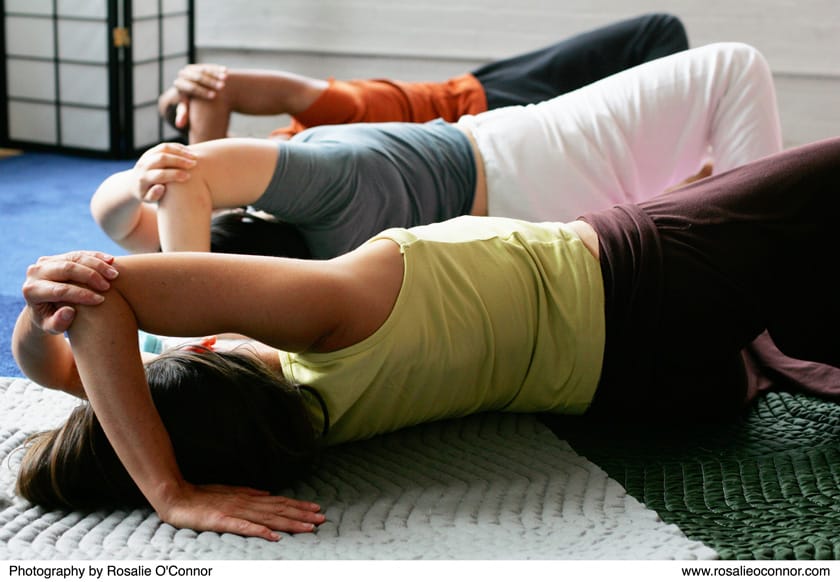
I guide you verbally through a series of movements, but I do not demonstrate. You are not copying me. You are following instructions and turning your attention inward, noticing what you feel, what moves easily, what resists, and what changes as you explore.
The movements are gentle and often surprisingly small. That is intentional. Slow, subtle movements give your nervous system the best opportunity to sense distinctions and discover new possibilities.
By the end of class, most people notice that something has shifted.
Movement feels more fluid. Posture feels more supported. They feel lighter, taller, or more at ease without traditional stretching or strengthening.
This is neurological learning, and it is available to anyone.
Some quick guidelines before you start:
These classes are an invitation to explore how you move, with curiosity, ease, and self-care as your guides. Whether you're new to this work or returning to it, you'll find that this approach is quite different from conventional exercise. There's nothing to push through, no performance required. Just you, your awareness, and a willingness to notice. The guidelines below will help you get the most out of each movement session.
Before & During Your Session
Set yourself up for comfort first. Wear loose, comfortable clothing that allows you to move freely. Have padding available for under your head or knees, and a blanket nearby if you tend to get cold. Most sessions will require enough space to lie down and move around, so find a quiet spot where you can settle in.
This is not exercise. Movements are repeated not to build strength or burn calories, but to give your nervous system the opportunity to notice, learn, and improve how you function.
Stay within a comfortable range. Avoid going to the extremes of any movement. If something is uncomfortable or causes pain, that's a signal you've gone too far. Back off, reduce the range, or change something until it feels manageable.
Allow your breath to flow freely. Holding your breath adds unnecessary tension to your movements. It's also often the first thing we unconsciously restrict when something isn't right, so use it as a cue to ease up or adjust what you're doing.
Go slowly. Slowing down is what makes awareness possible. The slower you move, the more you'll notice, and noticing is the whole point.
Approach it with curiosity. You're not here to do it "right." You're here to learn something about yourself and your movement. A spirit of genuine curiosity will serve you far better than effort or determination.
Confusion is normal. If an instruction isn't immediately clear, stay with it. It will become clearer as you continue moving. Trust the process.
The constraints are intentional. When a movement is limited or done in an unusual way, that's by design. It's there to help you move out of your habitual patterns so something new and more functional can emerge.
Rest whenever you need to. You don't have to wait to be invited. Honoring your own pace, comfort, and energy is part of the work.
Focus on the process, not the outcome. Progress in this work is often subtle and sometimes surprising. Let go of expectations and stay present with what's actually happening in each moment.
These classes are accessible to:

Anyone dealing with chronic stiffness, pain, or restricted movement
Athletes and active adults who want to move more efficiently
People recovering from injury or surgery who are ready for gentle movement
Anyone who spends long hours at a desk and wants to undo the effects
Curious people who want to understand their own movement better
People who have found yoga, Pilates, or other movement classes too physically demanding.
No prior experience with Feldenkrais® or any movement practice is required. You are never asked to push, force, or strain. If something is uncomfortable, you simply do less or imagine doing it.
What to expect

Length: 60 minutes
Location: Online via Zoom or in-person in Murray, UT
What to wear: Comfortable clothing you can move easily in
What to bring: a water bottle and a small blanket, if you tend to get cold
Each class has its own individual learning arc.
Drop-ins are always welcome, space permitting.
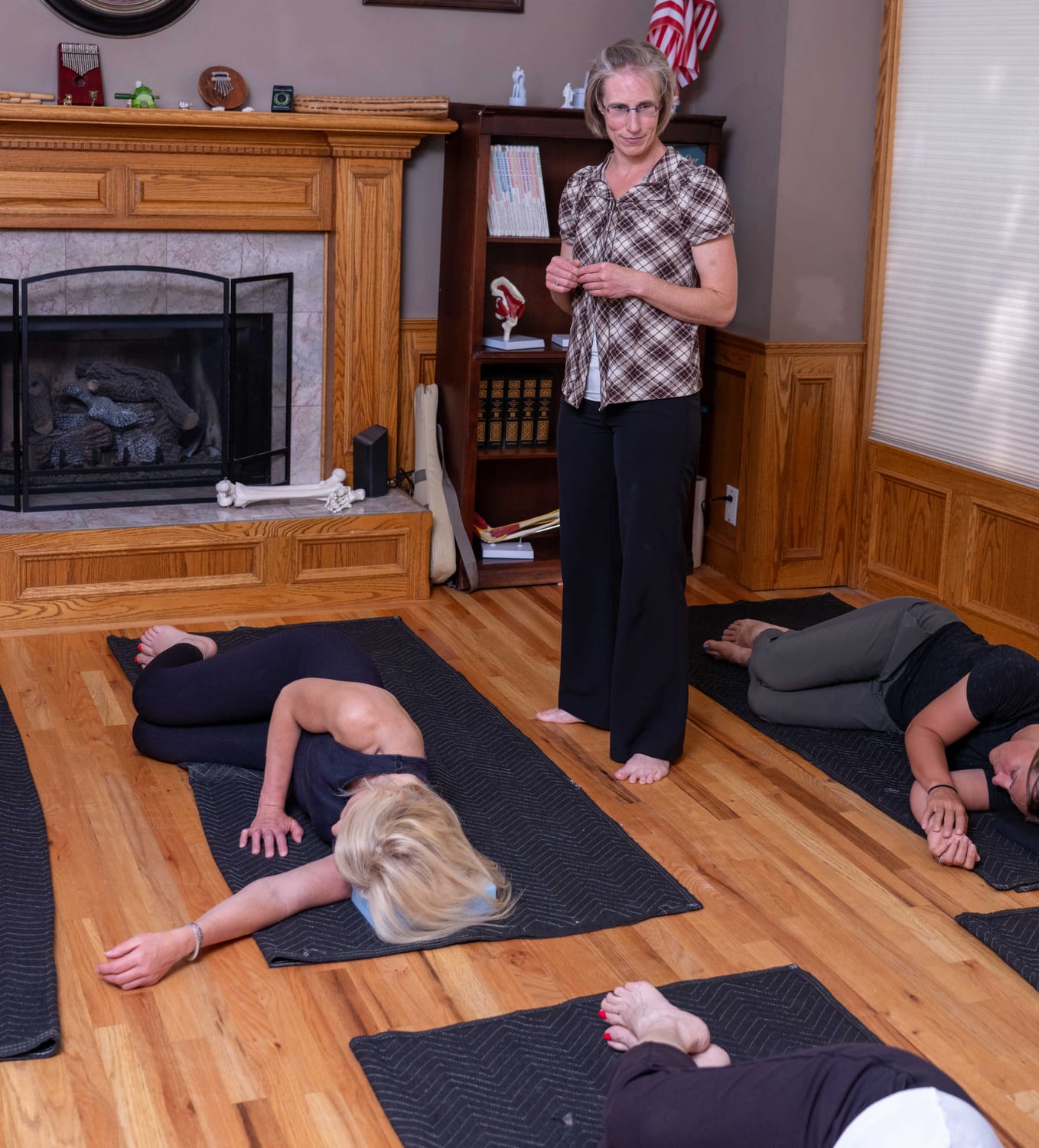
In-Person Group Classes
in Murray, UT
Drop-In Class: $30
4-class package: $100
WHAT PEOPLE SAY
Katelynn W.
"Each time I take Serena's ATM class, I can feel my body connecting a little more. This work is perfect for someone willing and able to accept change in their life. As you focus on each muscle and bone, you begin to move differently through the world."
Kara M.
"Serena has a love and enthusiasm for the Feldenkrais Method® that can be felt in every class. Her understanding of the power of conscious movement comes through in her clear and knowledgeable instruction."
Frequently Asked Questions
Most ATM lessons are done lying on the floor. If you're unable to get up and down from the floor, please reach out before registering. Many lessons can be adapted for sitting in a chair.
Yes, these classes are designed to work within your comfortable range. You are never asked to push through pain. Many people with chronic pain find ATM classes to be one of the most accessible movement practices they've tried.
A series is a structured sequence of lessons that build on each other over several weeks, creating a deeper learning arc. All classes also have their own learning arc and can stand alone. Drop in to any class since each one is complete in itself. Both options are valuable.
If you're new, a series is often a wonderful way to get started.